Gardener Feltham — Recycling and Sustainability Commitment
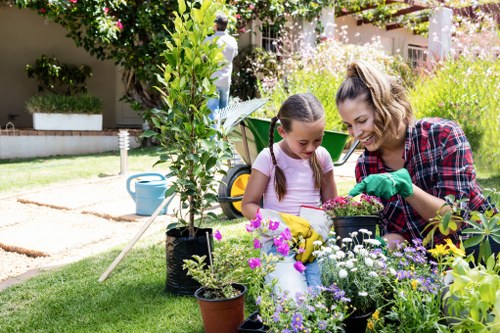 At Gardener Feltham we prioritise an eco-friendly waste disposal area and a practical, resilient sustainable rubbish gardening area. Our approach blends local borough waste separation practices with horticultural best practice so that green waste, soil return and reuse are part of every job. We work to ensure every collection and site visit contributes to lower landfill, higher recycling and healthier soils. Our mission is to make every garden service part of a circular, low-carbon loop.
Local waste separation and borough alignment
We align with the borough's approach to waste separation — dry recycling (paper, card, plastics), glass and separate food and garden waste streams — to improve material capture and sorting. Gardener Feltham follows local caddy requirements for food waste, separates woody green waste from mixed garden trimmings for composting, and loads materials into clearly labelled containers for transfer. This operational discipline supports municipal recycling schemes and reduces contamination rates. Our recycling percentage target is ambitious but achievable: we aim for a 65% recycling rate across our operations by 2030, with interim annual milestones to track progress. That target covers green waste processing, reuse of bulky garden material, segregation of inert waste, and redistribution of reusable items. We publish internal diversion figures and update crew training to maintain continuous improvement in our eco friendly waste disposal area practices.
Local transfer stations and logistics
To keep transport emissions low and processing efficient we use nearby transfer stations and materials recovery facilities. Our preferred local transfer stations include:- Hounslow Transfer Station — fast turnaround for green waste loads;
- Park Royal Transfer Facility — large-volume sorting and recycling consolidation;
- Southall / Isleworth collection hubs — convenient drop-off for segregated garden and bulky items.
 We schedule collections to match opening times at these transfer stations to avoid double-handling, and we actively consolidate loads so fewer trips are needed. Our crews use standardised containers that reduce contamination and speed up acceptance at facilities that support the borough’s mixed-recycling and organic routes. These logistics choices are central to our sustainable garden waste disposal approach.
Partnerships with charities and reuse organisations are a core part of our circular model. We collaborate with local groups such as FareShare, The Conservation Volunteers and community-run reuse projects to redirect usable materials — plant pots, soils, timber offcuts and landscaping bricks — away from landfill. Where items are reusable, we prioritise donation; where materials can be upcycled, we coordinate handoffs to local social enterprises. Community benefit is integral to our reuse pathways.
Our fleet strategy focuses on low-carbon vans and smarter routing. We operate a growing number of electric and hybrid vehicles, supplemented by modern Euro 6 diesel units for extended-range jobs. Telematics and route-optimisation software reduce mileage and idle time; combined with scheduled charging at low-carbon hubs, this reduces operational emissions significantly. We target a 40% reduction in logistics CO2 from a 2022 baseline by 2028.
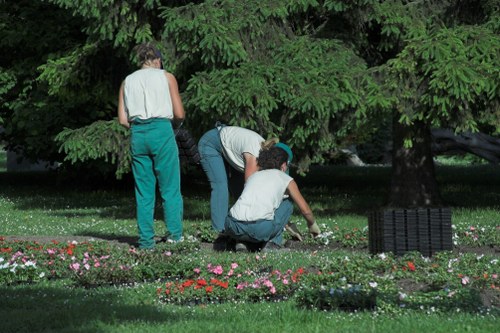
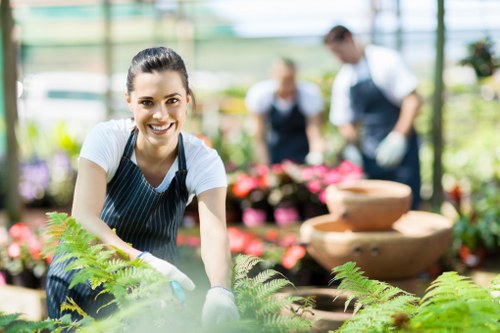 In the sustainable rubbish gardening area we apply horticultural techniques that close the loop: on-site mulching returns carbon to beds, mobile composting converts selected green waste into usable compost for client gardens, and woody waste is chipped for paths and mulch. These practices not only divert waste but improve soil structure and long-term garden resilience. Reuse on site is often the best outcome for garden-derived materials.
 Operationally, our waste hierarchy is simple and enforceable: reduce at source, segregate for recycling/reuse, then recover or compost. Practical activities include:
- On-site composting — turning suitable green waste into soil improver;
- Mulching and wood-chipping — reusing prunings as protective mulch;
- Segregated containerisation — keeping inert, recyclable and organic streams distinct to meet borough separation standards;
- Donation and reuse — passing usable materials to charities or community gardens.
To support local circular economy activity we maintain active agreements with community gardens and borough initiatives that manage soil health and plant rehoming. Our teams are trained to identify items suitable for reuse and to follow borough guidance for hazardous or restricted materials. Safety and regulatory compliance are embedded in every transfer and drop-off.
Monitoring and transparency are essential. We track tonnage diverted from landfill, greenhouse gas savings from our low-carbon vans and the volume of materials directed to charities and recovery facilities. Data-driven decision making informs route planning, crew training and investments in equipment for our eco-friendly waste disposal solutions.
Gardener Feltham is committed to delivering a practical, measurable sustainability programme that supports a greener Feltham and surrounding boroughs. Our target of 65% recycling by 2030, partnerships with local transfer stations and charities, and transition to low-emission vans together create a robust model for a truly sustainable rubbish gardening area. Join us in making sensible, long-lasting choices so that every garden we touch becomes part of a cleaner, greener local economy.