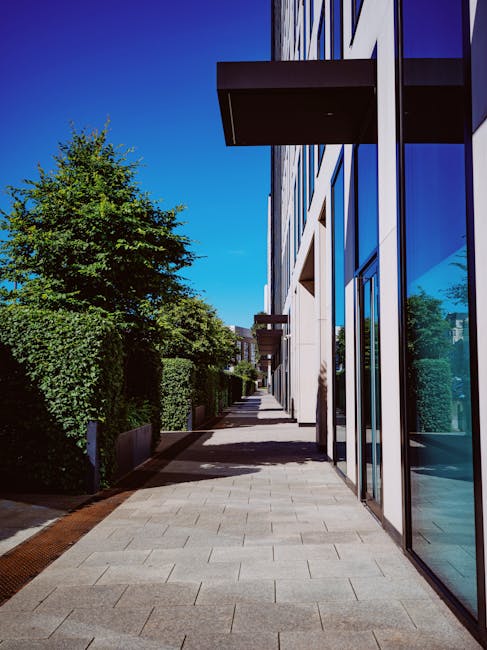
Office gardeners for business premises near Feltham station
If you manage an office, studio, managed workspace, or mixed-use business premises near Feltham station, the outdoor space can quietly shape first impressions before anyone even opens the door. A neat frontage, healthy planting, and well-kept paths do more than "look nice"; they suggest order, care, and competence. That is exactly why Office gardeners for business premises near Feltham station matters. In a busy local setting, where people arrive between trains, taxis, deliveries, and the usual weekday rush, the outside of a building needs to hold up properly, not just on a sunny day but on a wet Tuesday morning too.
This guide breaks down what office gardening actually involves, how commercial maintenance usually works, what to ask for, and where businesses often go wrong. If you are comparing options, planning seasonal upkeep, or trying to stop the site from drifting into a slightly tired look, you will find practical answers here. Nothing fluffy. Just the stuff that helps.
Table of Contents
- Why Office gardeners for business premises near Feltham station matters
- How Office gardeners for business premises near Feltham station works
- Key benefits and practical advantages
- Who this is for and when it makes sense
- Step-by-step guidance
- Expert tips for better results
- Common mistakes to avoid
- Tools, resources and recommendations
- Law, compliance, standards, or best practice
- Options, methods, or comparison table
- Case study or real-world example
- Practical checklist
- Conclusion
- Frequently asked questions
Why Office gardeners for business premises near Feltham station Matters
Commercial landscaping is not the same as domestic gardening, and that difference really shows. An office frontage near a station tends to experience more footfall, more litter, more compacted soil, and more wear on beds, borders, and grass. People are walking past quickly, often in a hurry, and they notice when shrubs are overgrown or when lawn edges are fraying. They notice the messy bits first. A bit unfair, maybe, but true.
For businesses near Feltham station, the outside area often serves several jobs at once: welcome zone, brand signal, safety buffer, and sometimes even a small place for staff to pause for a breather. If the planting is unmanaged, the whole site can feel less cared for. If it is maintained well, even a modest space can feel calmer and more professional. That shift matters when you are trying to reassure clients, tenants, visitors, or employees.
There is also a practical side. Poorly maintained shrubs can block sightlines, dead growth can create nuisance debris, and slippery leaf build-up can become a day-to-day annoyance. Office gardening is, at heart, about preventing those small problems from piling up into bigger ones. A tidy site is easier to manage, easier to present, and usually less expensive to rescue than to ignore for six months and then panic about on a Friday afternoon.
If you already know the outdoor area needs structured care, a good place to start is the broader services overview, then narrow down what your premises actually need. In some cases, you may only need scheduled mowing and border care. In others, a more complete package makes sense, especially if the site has inherited issues from previous tenants or an interrupted maintenance schedule.
How Office gardeners for business premises near Feltham station Works
Commercial garden maintenance usually starts with a site walk and a conversation about priorities. That sounds basic, but it is where the useful work begins. A gardener will look at access, frontage visibility, planting type, grass condition, hedge height, waste volume, and how often the site needs attention. Office premises are rarely one-size-fits-all. A compact courtyard behind a business unit is not the same as a visible front-of-house landscape with pathways, beds, and boundary hedging.
From there, the maintenance plan usually becomes a mix of recurring tasks and occasional heavier work. Recurring tasks might include mowing, trimming, edging, weeding, clearing leaves, pruning shrubs, and keeping entrances presentable. Heavier work could involve clearance, reshaping planting, tree work, or redesigning awkward areas that keep becoming overgrown. The point is not to make the site look artificially perfect. It is to make it consistently manageable.
Timing matters, too. Near a station, many businesses prefer visits outside peak arrival times so work does not interrupt staff, customers, or pedestrians. Early morning or quiet midweek slots often work well. Some sites need discreet maintenance, with minimal noise and quick waste removal. Others can tolerate more visible work, especially if the garden is tucked away from public view.
In practical terms, office gardening usually sits somewhere between maintenance and soft landscaping. For example, a space may need regular care but also a few adjustments to improve access or reduce future workload. That is where services such as garden maintenance and landscaping can complement each other, especially if the site has become a bit awkward over time. Truth be told, many business gardens look "difficult" only because no one has ever made them easier to manage.
Key Benefits and Practical Advantages
The most obvious benefit is presentation, but there are several others that are easy to underestimate until they are gone.
- Better first impressions: Clean edges, healthy planting, and controlled growth make the whole business look more organised.
- Reduced day-to-day hassle: If the grounds are maintained regularly, you spend less time reacting to problems.
- Safer access: Clear paths, managed overgrowth, and tidier borders can reduce avoidable trip and slip issues.
- Less seasonal shock: Sites that are looked after throughout the year are less likely to need a drastic, expensive reset.
- Improved staff experience: Even a small outdoor area can feel more pleasant for breaks, deliveries, or client waiting points.
- Stronger property care: Well-kept grounds usually support a better overall impression of the premises and the tenant or owner behind them.
There is another advantage that people do not always say out loud: peace of mind. A business manager should not need to keep wondering whether the hedge has swallowed the signage or whether the front grass has gone patchy again. Regular office garden care takes that mental load off the list. Small thing, maybe. But it adds up.
Where a premises has a more visible frontage, the right maintenance can also support brand identity. If your business presents itself as polished and dependable, the external space should say the same thing without shouting. Quiet confidence. That is the sweet spot.
Who This Is For and When It Makes Sense
Office gardeners near Feltham station are a sensible fit for a wide range of premises. You may need this service if you are a landlord, facilities manager, office administrator, leaseholder, property manager, or business owner trying to keep an external area under control without turning it into a full-time job.
It makes particular sense when any of the following apply:
- The frontage is visible to clients, tenants, or passers-by.
- You have planting that gets out of hand quickly in spring and summer.
- Leaves, weeds, or debris keep returning and never seem fully solved.
- Your internal team can do basic tidying but not proper grounds care.
- The site needs a tidy, repeatable standard rather than a one-off rescue.
- You are preparing for a lease handover, inspection, or building refresh.
It also makes sense when your team is too busy to manage outdoor work properly. Let's face it, most office staff have enough to do without being asked to fight brambles before breakfast. If your space is near station traffic, you will often find the mess returns faster than expected. A windy day and a few dropped leaves can change the mood of an entrance quickly.
Some business premises only need light care. Others need a more comprehensive reset after months of neglect, inherited from another occupant, or simply left to cope with the weather. If that sounds familiar, a one-off tidy may help, but ongoing care is usually the better long-term answer.
Step-by-Step Guidance
If you want to arrange office gardening properly, it helps to treat it like a small operations project rather than a loose request for "some gardening." Here is a simple way to approach it.
- Walk the site with fresh eyes. Look at the entrance, side access, rear areas, bins, boundaries, and any places people actually use.
- Identify the problems that matter most. Overgrown hedges? Patchy lawn? Heavy weeds? Constant leaf fall? Put the priorities in order.
- Decide what should happen weekly, fortnightly, monthly, or seasonally. Some tasks need frequent attention; others do not.
- Separate maintenance from improvement. A tidy-up and a redesign are not the same job. Keep them distinct.
- Check access and timing. Think about when gardeners can work with the least disruption to staff and visitors.
- Ask about waste removal and finish. There is no point trimming everything neatly if clippings are left looking like a hedgehog explosion.
- Review the result against your brief. Does the space look professional, safe, and manageable? If not, adjust the plan.
A useful habit is to take a few photos before the first visit, then compare them after the work settles in. Not because you need a dramatic before-and-after story for the internet, but because it helps you see what has genuinely improved and what still needs attention.
If your site also needs a deeper clear-out before routine maintenance begins, a garden clearance can remove the backlog and give the maintenance schedule a clean start. That is often the difference between chasing your tail and actually getting on top of the space.
Expert Tips for Better Results
In our experience, the best commercial garden results come from consistency, not heroics. A few practical habits make a real difference.
- Choose maintenance that matches growth patterns. A fast-growing hedge near a walkway may need attention more often than a low border planting.
- Think about sightlines. Keep entrances, signage, and vehicle routes visible. It is a simple fix that often gets missed.
- Use mixed seasonal planning. Spring and summer can create rapid growth; autumn brings leaves and debris; winter reveals structure and access issues.
- Keep edges crisp. The edge of a lawn or bed often determines whether the whole site feels tidy.
- Don't overcomplicate planting. If the space is hard to access, choose planting that is easier to maintain. Fancy is not always friendly.
- Ask for realistic upkeep, not perfection. Commercial grounds should be sustainable to maintain, not just impressive for one afternoon.
One small but valuable tip: if staff regularly smoke, take breaks, or move between buildings in the same area, maintain those routes as carefully as the main entrance. People notice the everyday paths. Sometimes more than the front door, oddly enough.
For hedges and boundary planting, structured hedge trimming can keep growth under control without stripping privacy or making the site look harsh. That balance matters. Too little trimming looks neglected; too much can make the whole place feel exposed.
Common Mistakes to Avoid
Commercial garden care often fails for boring reasons, which is annoying but helpful because boring problems are usually fixable.
- Only calling someone when the site is already overgrown. Reactive work is more disruptive and usually harder to budget for.
- Assuming one visit will solve everything. A business site near a station usually needs ongoing attention.
- Ignoring access constraints. If waste cannot be removed easily, or if work blocks a doorway, the whole setup becomes awkward fast.
- Mixing up aesthetics and maintenance. Nice-looking planting is good, but not if it becomes unmanageable within six weeks.
- Overlooking tree and hedge growth. What starts as "a bit tall" can suddenly affect light, safety, or signage.
- Failing to agree the standard. If no one defines what "tidy" means, expectations drift.
Another common mistake is treating outdoor care as separate from the rest of the premises. In reality, the garden or frontage is part of the building experience. If the exterior is neglected, the whole site feels it. A wobbly impression is still a wobbly impression.
When the space includes larger shrubs, trees, or obstructive branches, it can be sensible to look at tree lopping and removal as part of a wider plan, rather than waiting until a branch becomes a problem. The key is not drama. It is control.
Tools, Resources and Recommendations
Good office gardening relies on the right equipment, but also on the right approach. You do not need to know every tool in the shed. Still, it helps to understand what tends to be used and why.
| Need | Typical approach | Why it matters |
|---|---|---|
| Lawn care | Regular mowing and edging | Keeps frontages looking tidy and prevents a rough, unfinished look |
| Plant control | Pruning, trimming, and selective shaping | Stops growth from blocking access or sightlines |
| Site reset | Clearance and waste removal | Removes backlog before maintenance begins |
| Improvement works | Soft landscaping or layout changes | Can make the site easier to maintain over time |
| Ongoing upkeep | Planned maintenance schedule | Keeps the property presentable without big spikes in workload |
If your premises have grass areas, regular lawn mowing is one of the simplest ways to keep the site looking organised. It sounds almost too obvious, but it genuinely makes a huge difference. A lawn can go from "all right" to "why is this here?" surprisingly quickly if it is ignored.
For bigger changes, a softer design refresh may be a better use of money than repeated repairs to awkward planting. That is where landscape gardening can help. It is not always about making the space prettier in a dramatic sense. Often, it is about making it easier to live with, which is far more valuable for a business.
You may also find it useful to review business policies that support how the work is carried out, including health and safety guidance and insurance and safety information. Those pages are there for a reason. Commercial premises work is not the place for loose assumptions, especially when access, equipment, and public areas are involved.
Law, Compliance, Standards, or Best Practice
For office gardens and business premises, the main thing is to keep the space managed in a way that is safe, practical, and consistent with normal commercial expectations. Depending on the site, there may be additional duties around access, trip hazards, waste handling, contractor safety, and sensible working arrangements. The exact responsibilities depend on who occupies or controls the premises, so it is wise to check your own arrangements carefully rather than guessing.
Best practice usually includes:
- keeping entrances and walkways clear;
- managing growth so it does not interfere with access or visibility;
- disposing of garden waste responsibly;
- using competent contractors for higher-risk work;
- agreeing a clear schedule and scope of works;
- making sure visitors and staff are not put at unnecessary risk during maintenance.
If you are comparing providers, ask how they manage safety, equipment, public access, and waste. It is perfectly normal to ask. In fact, it would be odd not to. You want the job done well, but you also want it done without creating a little parade of avoidable issues along the way.
For businesses that care about sustainability, it can also help to look at how green waste is handled and whether the approach supports recycling and sustainability. That does not have to become a grand environmental statement. Sometimes it is just a practical preference to avoid waste going to the wrong place or being handled carelessly.
Options, Methods, or Comparison Table
Most business premises near Feltham station will end up choosing one of three broad approaches: occasional tidy-ups, scheduled maintenance, or a more complete grounds care arrangement. Each has its place.
| Approach | Best for | Strengths | Limitations |
|---|---|---|---|
| Occasional tidy-up | Small sites with low growth | Simple, flexible, quick to arrange | Can look inconsistent if left too long between visits |
| Scheduled maintenance | Most office premises | Stable appearance, easier budgeting, fewer surprises | Needs a clear brief and regular review |
| Maintenance plus improvement works | Sites with layout issues or inherited problems | Better long-term usability, reduced future workload | Higher upfront effort and planning |
For many businesses, the second option is the sweet spot. A regular schedule keeps the grounds respectable and avoids emergency fixes. But if the site is awkward, tired, or constantly fighting its own design, the third option can save time over the long run. A bit of upfront effort now often prevents the "we should have done this months ago" moment later.
Where outdoor areas also include paved or timber features, it may be worth considering whether complementary work like decking services would improve how the space is used. Not every office needs that, of course. But if staff use the outside area, structure matters. People tend to gather where the space feels intentional.
Case Study or Real-World Example
Here is a realistic example, based on a typical kind of job rather than a dramatic transformation story. A business premises near a station had a front border that had become patchy, a hedge that was starting to lean into the footpath, and a side area full of leaves and minor debris. Nothing catastrophic. Just the sort of mess that makes a building feel less cared for each week.
The first step was to clear the clutter and cut back the most obvious overgrowth. After that, the maintenance focus shifted to repeatable tasks: hedge trimming, edging, mowing the small grass section, and keeping the planting simple enough to manage. The business did not want a fussy landscape. It wanted a professional-looking frontage that could survive busy weeks and sudden weather changes.
What changed most was not just appearance, but rhythm. Once the outdoor work was on a schedule, the site stopped slipping backwards. Staff no longer felt embarrassed by the entrance. Visitors stopped walking into a half-neglected approach. That might sound minor, but minor details carry weight in business settings. They always do.
If the same premises had also needed a broader clean-out before ongoing maintenance, the smart sequence would have been clearance first, then maintenance, then any improvement work. That order keeps the site manageable rather than making the gardener fight the same battle every visit.
Practical Checklist
Use this checklist if you are planning office gardening for a business site near Feltham station. It keeps the conversation grounded in actual needs.
- Have you identified the main external areas that people see or use?
- Do you know whether the priority is presentation, safety, access, or all three?
- Is there a recurring issue with grass, hedges, weeds, leaves, or debris?
- Do you need one-off clearance before maintenance begins?
- Have you agreed when work should happen to avoid disruption?
- Do you need simple maintenance or a broader improvement plan?
- Is waste removal part of the scope?
- Have you checked any access limits, security procedures, or site instructions?
- Is the expected finish clearly defined?
- Will the space still be easy to maintain next month and next season?
Expert summary: the best office gardens are not the most decorative ones; they are the ones that stay neat, usable, and easy to manage without constant intervention.
If you are still weighing up the bigger picture, the helpful next step is often to review pricing and quotes alongside the scope of work. Not because price is everything, but because a clear scope prevents misunderstandings. And misunderstandings around grounds care are a surprisingly common headache.
Conclusion
Office gardeners for business premises near Feltham station are not just there to make things look green. They help protect the impression your building gives, reduce day-to-day hassle, and keep the outside of the property working as part of the business rather than against it. Near a busy station, where people notice details quickly, that matters more than many teams first expect.
The smartest approach is usually steady, practical maintenance backed by occasional improvement work where needed. Keep the brief clear, keep the standard realistic, and do not wait until the site has become a weekend rescue job. A well-kept exterior is one of those quiet business assets people feel before they think about it.
If you want to understand the team behind the service, you can also read more about the company background or use the contact page when you are ready to talk through your premises in more detail.
Get a free quote today and see how much you can save.
Sometimes the smallest improvements outside the door make the biggest difference to how a place feels. That is the quiet truth of good commercial gardening.
Frequently Asked Questions
What do office gardeners for business premises near Feltham station usually do?
They usually handle recurring maintenance such as mowing, hedge trimming, pruning, weeding, leaf clearance, and general tidying. Some jobs also include site resets or small landscape improvements if the premises need more than routine care.
How often should a business premises be maintained?
It depends on the size of the site, the planting, and how visible the frontage is. Some premises need weekly attention in growing season, while others can manage with less frequent visits. A sensible schedule is better than reacting whenever the space starts to look tired.
Is office garden maintenance different from domestic gardening?
Yes. Commercial sites usually need more consistency, clearer standards, safer access arrangements, and work timed around staff, visitors, and deliveries. The priority is not just appearance; it is also reliability and practicality.
What if the garden area is already badly overgrown?
In that case, a clearance or reset is often the best first step. Once the site is under control, regular maintenance becomes much easier to manage and usually more cost-effective than repeated heavy tidying.
Can gardening work be done without disrupting staff or visitors?
Usually, yes. Good planning helps a lot. Many office sites near station areas prefer early visits, quieter time slots, or work scheduled around daily footfall so the premises remain usable.
Do business premises need lawn mowing if the grass area is small?
Often they do. Even a small patch of grass can change the whole look of a frontage. If it is visible, irregular mowing can make the site look unkempt surprisingly quickly.
What should I ask before hiring an office gardener?
Ask what is included, how often visits happen, how waste is handled, what safety arrangements are in place, and whether the service is maintenance-only or includes improvement work. Clear questions save a lot of hassle later.
Is hedge trimming important for office premises?
Yes, especially where hedges affect visibility, privacy, entrances, or walkways. Trimming helps keep the site tidy and prevents growth from becoming a nuisance or obstruction.
How do I know whether I need landscaping or maintenance?
If the site is basically fine but just needs regular care, maintenance is usually enough. If the layout is awkward, the planting is unsuitable, or the space is hard to manage, landscaping may be a better long-term fix.
What makes a good commercial garden standard?
A good standard is tidy, safe, and repeatable. The space should look professionally cared for without needing constant emergency intervention. It should also be realistic to maintain over time.
Can office gardening help with staff wellbeing?
It can, in a modest but real way. A clean, pleasant outdoor area gives people a better place to pause, and it simply makes the workplace feel more considered. Not magical, just better.
Where should I start if I want a quote?
Start by noting the site size, the main problem areas, how often you think work may be needed, and whether you want routine care or a one-off reset. Then speak through the options and compare them against your priorities.
If you want to keep your premises tidy, professional, and easier to manage, the best time to begin is before the next growth spurt or leaf fall catches you off guard. A little planning now saves a lot of scrambling later.